





Shimla residents hold protest, oppose privatisation of HPSEBL


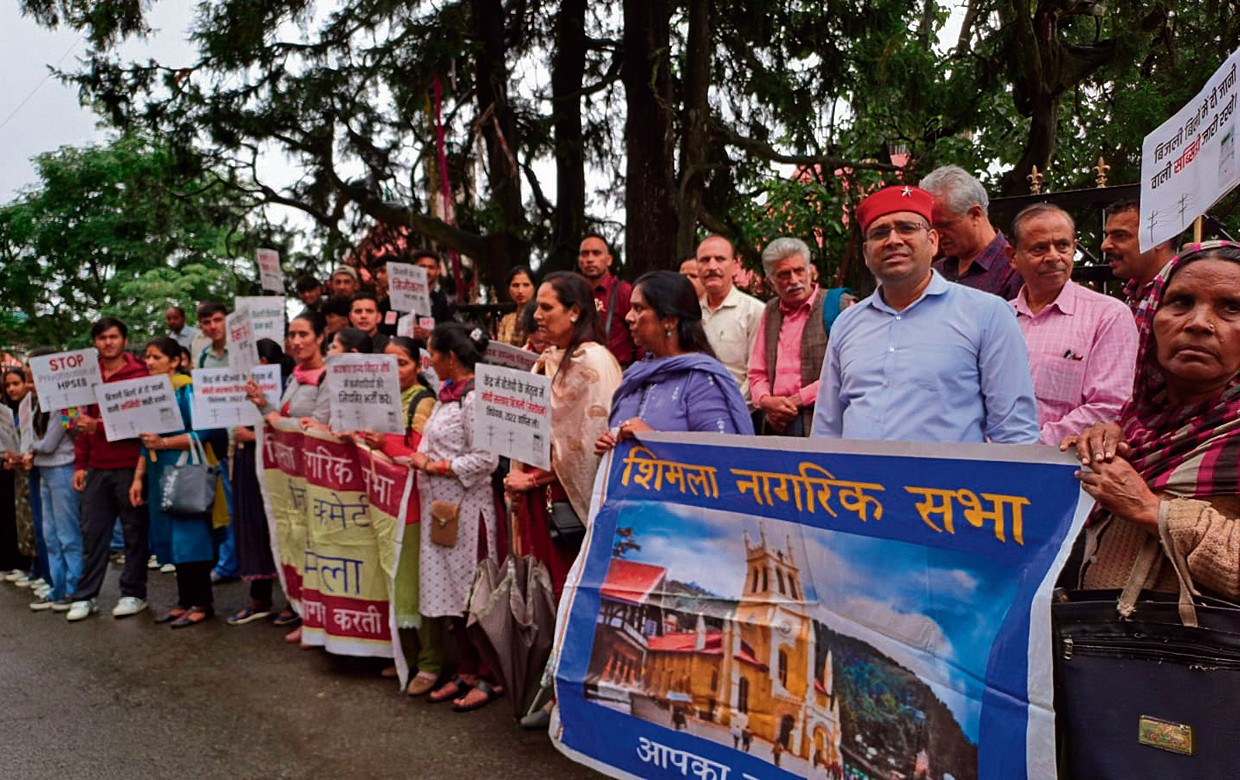
Shimla, August 28
Shimla Nagrik Sabha staged a protest outside the premises of Deputy Commissioner’s office today and demanded the central government to revoke its policy of privatising the power sector and to repeal the Electricity (Amendment) Bill, 2022. They also called for an immediate halt to the privatisation of the state electricity board and the installation of prepaid smart meters.
Against smart meters
The smart meters, priced around Rs 9,000 compared to Rs 400 to Rs 500 for electronic meters, will lead to increased costs for consumers. The lifespan of these meters is seven to eight years, malfunction will incur additional costs for the consumers. — Sanjay Chauhan, Coordinator, Shimla Nagrik Sabha
During the protest, Sanjay Chauhan, Coordinator, Shimla Nagrik Sabha, said that the privatisation of the electricity sector began with the Electricity Act of 2003, introduced by the then Prime Minister Atal Bihari Vajpayee led central government, which aimed to transfer the electricity sector to private companies by dismantling state electricity boards.
“Despite widespread opposition, the current PM Narendra Modi led central government is continuing this trend with the Electricity (Amendment) Bill, 2022. The bill supports the installation of smart prepaid meters,” he said.
“In Himachal, the installation of smart prepaid meters began under the previous BJP gov led by then Chief Minister Jai Ram Thakur, with around 1,51,740 meters
Installed in Shimla and Dharamshala. The current Congress government has also awarded tenders worth Rs 3100 crore for the installation of 26 lakh smart meters, pressuring the state to privatise its electricity board,” said Chauhan.
“The smart meters, priced around Rs 9,000 compared to Rs 400 to Rs 500 for electronic meters, will lead to increased costs for consumers. They will function like mobile phones cutting off electricity when funds run out. The lifespan of these meters is approximately seven to eight years, and any malfunction will incur additional costs for the consumers,” he said.
He said that the introduction of smart meters will lead to significantly higher electricity bills, pushing the poor and middle class out of access to affordable electricity. “The central government’s push for privatisation is expected to eliminate subsidies, increase electricity rates, and result in differentiated rates for day and night usage. Additionally, privatisation will eventually lead to job losses of technical staff and pension issues for retirees as private companies will take over the infrastructure built by government boards,” said Chauhan.

Tribune News Service
.